

Prof. Koichi Asatani, IEEE Fellow, IEICE Fellow
Kogakuin University, Japan
Koichita Asani received his B.E.E.E., M.E.E.E. and Ph. D. degrees from Kyoto University in 1969, 1971 and 1974, respectively. From 1974 to 1997, he was with NTT and engaged in R&D on optical fiber communication systems, hi-definition video transmission systems, FTTH, ISDN, B-ISDN, ATM networks, IP Networks and their strategic planning. From 1997 to 2014, he served as Professor at Kogakuin University. From 1999 to 2012, he was with Graduate School of Global Information and Telecommunication, Waseda University as Visiting Professor. He was Chair Professor, Nankai University, Tianjin, China for 2014-2018. He is currently Professor, Shanghai University, China, and also Professor Emeritus, Kogakuin University. He is Life Fellow of IEEE and Life Fellow of IEICE. He was appointed as Distinguished Lecturer of IEEE ComSoc for 2006-2008, 2011-2012, and 2013-2014. He is Ex-Chair and Advisory Board Member of IEEE Technical Committee on Communication Quality and Reliability (CQR-TC), Feature Editor on Standards (1993-1999), Senior Technical Editor (1999-2005) of IEEE Communications Magazine. From 1988 through 2000, he served as Vice-Chair of ITU-T SG 13, and Chair of a Working Party of SG13, responsible for digital networks including GII, IP networks, NGN and Future Networks. He served as Chair for National Committee on Next Generation Networks in Japan. He also served as Chair, R&D and Standardizations Working Group, Next Generation IP Network Promotion Forum. He served as IEEE ComSoc Director, Membership Programs Development for 2014-2015. He served as Chair, IEEE ComSoc GIMS Committee for 2018-2019, and is IEEE ComSoc Fellow Evaluation Committee member for 2019-2021. He is serving as a Member at Large of Board of Governors, IEEE ComSoc. He also has been serving as a Board member, IEICE, and Chair, IEICE Standards Activities since 2014. He served as various positions of numerous IEEE conferences, including General Chair of International CQR Workshop 1994, General Chair of International Symposium of Interworking 96, General Chair of SIIT2009, Symposium Co-Chair of Communications QoS, Reliability and Performance Modeling Symposium at ICC and Globecom (2002-2004), which he founded in 2002. He was Executive Chair at ICC2011 in Kyoto, Tutorial Co-Chair at ICC2016, and General Co-Chair at IEEE 5G Summits Tianjin (2016) and Tokyo (2017). He has published more than fifty papers, authored/co-authored twenty books, and gave more than 140 talks including keynotes and invited talks at the prestigious international conferences such as IEEE ICC and Globecom. He received international and national awards including MIC Minister Award (2002) and IEEE ComSoc CQR-TC Lifetime Service Award (2016). His current interests include broadband networking, Internet, NGN, Future Networks, IoT, 5G and 6G Networking and their QoS aspects.
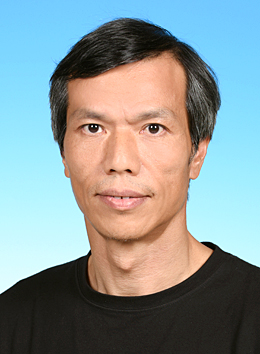
Prof. James Tin-Yau KWOK, IEEE Fellow
Hong Kong University of Science and Technology, Hong Kong, China
James Kwok is a Professor in the Department of Computer Science and Engineering, Hong Kong University of Science and Technology. He is an IEEE Fellow. Prof Kwok received his B.Sc. degree in Electrical and Electronic Engineering from the University of Hong Kong and his Ph.D. degree in computer science from the Hong Kong University of Science and Technology. He then joined the Department of Computer Science, Hong Kong Baptist University as an Assistant Professor. He returned to the Hong Kong University of Science and Technology and is now a Professor in the Department of Computer Science and Engineering. He is serving / served as an Associate Editor for the IEEE Transactions on Neural Networks and Learning Systems, Neural Networks, Neurocomputing, Artificial Intelligence Journal, International Journal of Data Science and Analytics, and an Action Editor of Machine Learning. He is also serving as Senior Area Chairs of major machine learning / AI conferences including NeurIPS, ICML, ICLR, IJCAI, and as Area Chairs of conferences including AAAI and ECML. He is on the IJCAI Board of Trustees. He is recognized as the Most Influential Scholar Award Honorable Mention for "outstanding and vibrant contributions to the field of AAAI/IJCAI between 2009 and 2019", and an inaugural Highly Ranked Scholar by ScholarGPS. Prof Kwok is the IJCAI-2025 Program Chair and PAKDD-2026 General Chair.

Prof. Runhe Huang
Hosei University, Japan
Runhe Huang received her B.Sc. in Electronics Technology from the National University of Defense Technology, China, in 1982, and her Ph.D. in Computer Science and Mathematics from the University of the West of England, UK, in 1993. She has been a full professor at Hosei University, Japan, since 2003. She served as the Head of the Department of Computer Science from 2008 to 2010 and currently holds the position of Deputy Director of the Hosei University Library. She served as Chair and Vice Chair of the IEEE CIS Smart World Technical Committee (SWTC) from 2019 to 2022.
Her research fields include Artificial Intelligence, Ubiquitous Intelligence Computing, Machine Intelligence, Cognitive Computing, and Knowledge Modeling. She has authored more than 200 academic papers.
Title: Compassionate Technology for Supporting Vulnerable Individuals
Abstract
In an aging and increasingly complex society, there is a growing demand for technologies that not only automate tasks but also foster care, safety, and inclusion. Artificial Intelligence (AI) and the Internet of Things (IoT) hold great promise in addressing the needs of vulnerable populations such as the elderly, individuals with disabilities, and socially or medically fragile individuals. The future of compassionate technology lies in designing systems that uphold human dignity and promote equity by actively supporting daily living, health, and communication.